Bringing history to life for children can be a challenging task. Traditional teaching methods might not always capture their interest or imagination. However, with the advent of technology and innovative educational resources, history can be made exciting and interactive. This article explores a variety of interactive games, apps, books, and activities that turn history lessons into engaging, immersive experiences, helping children develop a deeper understanding and appreciation for the past.

In this Article
- Why Interactive History Games and Lessons Matter
- Interactive Games and Apps That Bring History to Life
- Books and Magazines That Make History Exciting
- Online Resources for Interactive History Lessons and Games
- Historical Visits and Re-enactments
- Historical Clubs and Groups for Children
- Additional Strategies for Interactive History Learning
- Frequently Asked Questions (FAQs)
- Conclusion
Why Interactive History Games and Lessons Matter
Interactive history lessons are crucial for several reasons:
- Engagement: Interactive elements like games, videos, and quizzes keep children engaged and interested in the subject.
- Comprehension: By visualizing historical events and figures, children can better understand complex concepts and timelines.
- Retention: Hands-on activities and interactive content improve memory retention.
- Critical Thinking: Interactive lessons encourage children to think critically about historical events and their impact on the present.
If you’re teaching Christmas traditions, our Christmas Through History timeline offers a clear, kid-friendly overview of how celebrations evolved — a ready-made visual tool you can use straight away in interactive lessons.
Interactive Board Games and Apps That Bring History to Life
Explore History with Hands-On Games and Kits
While digital apps are a fun way to explore history, some children really engage with hands-on learning. Board games and interactive kits can make historical events tangible, spark imagination, and develop problem-solving skills — all while bringing the past to life in a fun, screen-free way. Here are our top picks:

1. SimplyFun Time Jumpers
Travel back to the 20th century and discover its greatest achievements, discoveries, and events with this award-winning game.
- Engaging gameplay: Players race to place historical events in chronological order, competing to earn the highest score.
- Educational value: Aligned with Social Science standards, it boosts history, geography, and vocabulary skills while keeping kids entertained.
- Family fun: Ideal for ages 8+, with space for 2–5 players. Perfect for curious minds and history enthusiasts alike.
2. Who Knows Better? – History Edition
A quick, competitive card game that sharpens historical knowledge through trivia challenges.
- Learning through play: Answer questions about events, figures, inventions, and turning points in history.
- Family bonding: Includes 500 questions that spark discussion, fact-sharing, and plenty of laughter.
- Flexible gameplay: Each round lasts around 15 minutes, making it perfect for short sessions or extended game nights.
3. Timeline: Historical Events Game
- A card game where players place events in chronological order. Teaches history in an interactive, competitive way.
- Why it works: It’s simple, fast-paced, and teaches kids how to think critically about cause-and-effect in history.
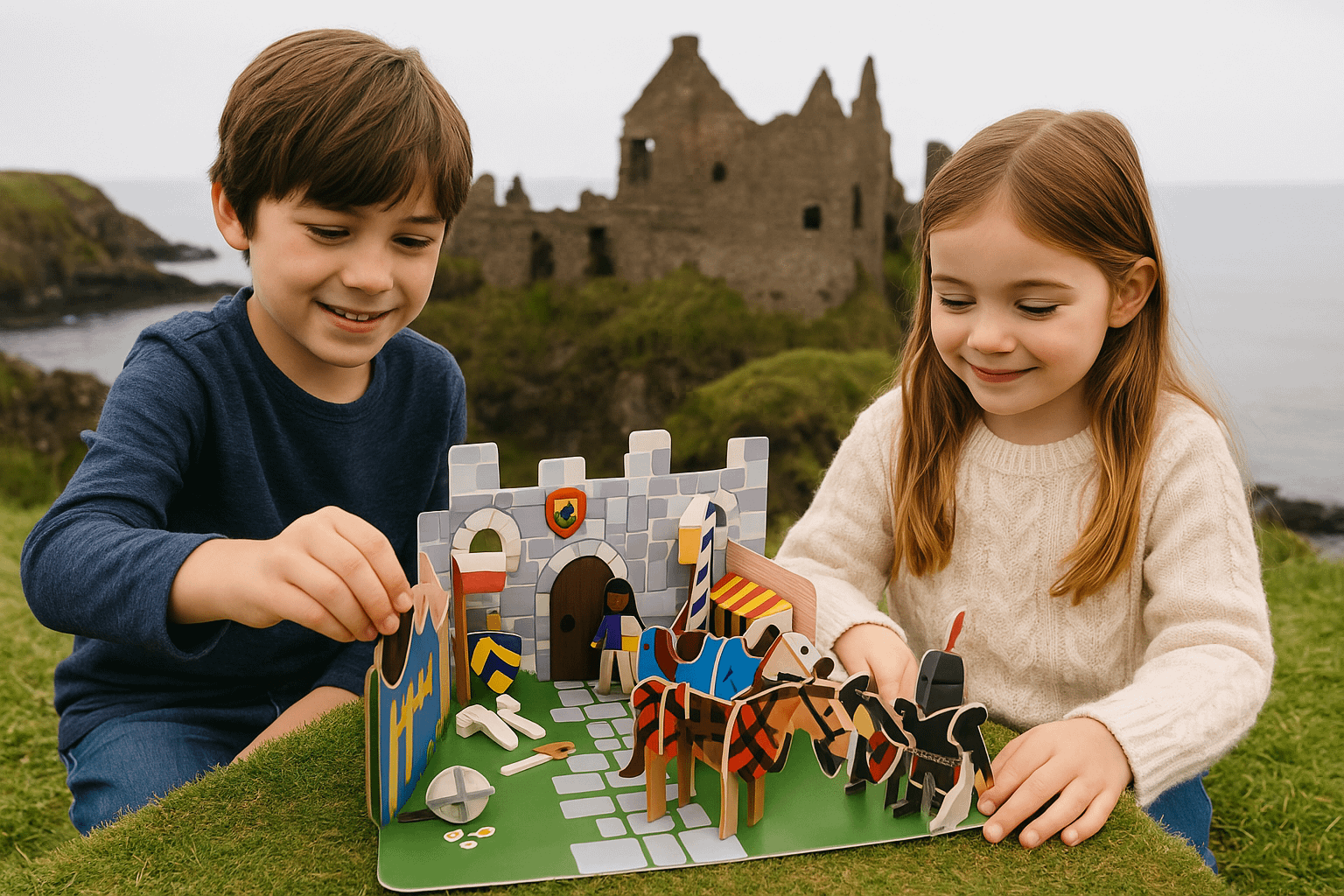
4. Playpress Medieval Castle Kit
- Cardboard castle-building kit to recreate medieval life, battles, and storytelling adventures.
- Why It’s Great: Hands-on, sustainable, encourages creativity and historical roleplay.
- Buy Playpress Medieval Castle Kit or read our full review here.
Once children have explored history hands-on with games and kits, they can dive into the digital apps below to continue their interactive adventures with quizzes, stories, and animated timelines.
5. Ancient Wonders Dig Kit
Bring archaeology to life by unearthing miniature models of some of the world’s most famous landmarks.
- Exciting excavation: Kids dig into six plaster “earth balls” to reveal replicas of the Parthenon, Angkor Wat, the Pantheon, Moai Statues, the Great Sphinx, and Potala Palace.
- Double the learning: Comes with gemstones sourced from around the world and flashcards that explain each treasure’s history and geology.
- Mess-free fun: Includes tools and a protective mat for clean play.
- Perfect gift: Ideal for ages 6+, combining archaeology, world history, and STEM learning in one kit.
Best History Apps for Kids
1. History for Kids
History for Kids offers a wide range of interactive content designed to make learning history fun and engaging. The app includes quizzes, timelines, and interesting facts about different historical periods.
Why It’s Great: It covers various topics from ancient civilizations to modern history, ensuring a comprehensive learning experience.

2. Khan Academy Kids
Khan Academy Kids provides interactive lessons across a range of subjects, including history. The app features animated videos, quizzes, and games that make learning history an adventure.
Why It’s Great: The content is designed by experts and aligns with educational standards, ensuring high-quality learning materials.

3. Barefoot World Atlas
This interactive globe allows children to explore different countries and their histories. With detailed maps, videos, and animations, children can learn about various cultures, historical events, and landmarks.
Why It’s Great: The app’s engaging visuals and interactive elements make it a favorite among young learners.
Available On: iOS

4. Women Who Changed the World
Women Who Changed the World is an educational app that introduces children to the lives and achievements of some of the most influential women in history. Through interactive games, activities and engaging storytelling lessons, children can learn about these women’s contributions to various fields, including science, politics, art, and more.
Why It’s Great: This app emphasizes the importance of women’s contributions throughout history, offering children inspiring role models and promoting gender equality. The interactive format keeps children engaged and makes learning about history fun.
Available On: Android

Books and Magazines That Make History Exciting
1. “Horrible Histories” Series by Terry Deary


The “Horrible Histories” series is known for its humorous and engaging approach to history. The books cover various periods, from the Stone Age to the Woeful Second World War, with fun facts and illustrations.
Why It’s Great: The series uses humor and engaging illustrations to make history accessible and fun for children.
2. “A Child’s History of the World” by V.M. Hillyer
This classic book provides a comprehensive overview of world history, written in a narrative style that is easy for children to understand. It covers significant events and figures from ancient to modern times.
Why It’s Great: The storytelling approach makes historical events relatable and engaging for young readers.
Affiliate Link: Purchase A Child’s History of the World
3. “DK Eyewitness Books” Series
The “DK Eyewitness Books” series offers detailed and visually appealing books on various historical topics. Each book is packed with photographs, illustrations, and detailed information.


Why It’s Great: The rich visual content and detailed information make these books excellent resources for children who enjoy exploring history in depth.
4. “Good Night Stories for Rebel Girls” by Elena Favilli and Francesca Cavallo
This book features stories about 100 extraordinary women from history, ranging from ancient times to the present day. Each story is accompanied by beautiful illustrations.
Why It’s Great: The book inspires children by highlighting the achievements of women throughout history, making it an excellent resource for young readers.


5. “Fantastically Great Women Who Changed the World” by Kate Pankhurst
This book introduces young readers to the stories of some of the most influential women in history, from scientists and artists to politicians and adventurers. Each page is filled with colorful illustrations and engaging narratives.
Why It’s Great: The book celebrates the achievements of women and inspires children to learn more about their contributions to history.
6. “Rosie Revere, Engineer” by Andrea Beaty
While not a history book per se, “Rosie Revere, Engineer” introduces young readers to the world of engineering through the story of a young girl inspired by historical female inventors and engineers. It’s a great way to connect historical achievements with present-day aspirations.
Why It’s Great: The book encourages creativity and innovation, linking historical achievements with practical applications.
7. A Child Through Time: The Book of Children’s History (DK Panorama)
A Child Through Time explores the lives of children from different historical periods, showcasing their daily routines, clothing, education, and cultures. The book is filled with engaging illustrations and informative text, bringing history to life through the perspective of young people.

Why It’s Great: The vivid storytelling and detailed visuals provide an immersive look at history, making it an excellent resource for children who enjoy learning about the past through relatable experiences. Read our comprehensive review of A Child Through Time here.
8. Honest History
Honest History is a beautifully crafted history magazine for kids, filled with true stories from the past that bring history to life. Each issue focuses on a fascinating topic, featuring vibrant illustrations, engaging storytelling, and fun activities.
Why It’s Great: Honest History makes learning history exciting and accessible, inspiring curiosity and encouraging kids to explore the past beyond the pages.
Leveraging Online Resources for Interactive History Lessons and Games
Amazon Kids+
Amazon Kids+ (formerly FreeTime Unlimited) offers a vast library of books, videos, and educational apps, including many history-related resources. Furthermore, with thousands of books and educational materials, children can explore different historical periods and events at their own pace.
Why It’s Great: The subscription service provides unlimited access to a wide range of content, ensuring that children always have something new and exciting to explore.
Available On: iOS, Android, Amazon Fire
Twinkl Kids’ TV Mini Video Lessons
Twinkl Kids’ TV offers a variety of mini video lessons that cover a wide range of historical topics. These videos are designed to be engaging and educational, making complex historical events and figures accessible to children through fun and informative content. For example this short video teaches about Ancient Egypt through a catchy song:
Why It’s Great: Twinkl Kids’ TV video lessons are crafted by educational experts and are specifically designed for children. The videos make learning history visually engaging and can complement other learning resources like books and apps.
Available On: Web
Link: Explore Twinkl Kids’ TV History Lessons
Historical Visits and Re-enactments
1. Visit Historical Sites
Visiting historical sites can be a powerful way to bring history to life. Whether it’s a local landmark or a famous historical location, these visits provide tangible connections to the past.
Here are a few of our tops picks in the United States:
In the United Kingdom you might like to try these attractions:
2. Participate in Re-enactments
Historical re-enactments offer a unique, immersive way for children to experience history firsthand, making the past come alive in a way that textbooks cannot. Through these events, they can observe how people lived, worked, and dressed during different historical periods, gaining a deeper appreciation for the customs and traditions of the past.

Re-enactment Events in the United Kingdom
In the UK there are numerous re-enactment societies and events suitable for children to ignite an interest in historical events. For example, joining the Sealed Knot Society, one of the largest re-enactment groups in the UK, provides children and families with opportunities to participate in events that bring to life the English Civil War. The society’s website, thesealedknot.org.uk, features a calendar of events that are not only educational but also full of dramatic battles, historical demonstrations, and interactive experiences. These events allow participants to wear period-accurate clothing, handle replica weapons, and engage with historical figures, giving children an authentic feel of life in the 17th century.
Additionally, the Historic UK Events Diary offers a broader range of re-enactments spanning different periods of British history. This resource, accessible at historic-uk.com, is filled with listings of events across the country, including Viking festivals, medieval fairs, and WWII-themed events. Children can engage with various time periods through these reenactments, helping them to understand the nuances of different eras.
For those who prefer a more community-driven approach, try the Facebook UK Medieval Reenactment Group. It is also be a valuable resource for discovering local re-enactments and living history events. The group brings together reenactors, history enthusiasts, and organizers. In this way it makes it easier for parents to find opportunities for their children to participate in re-enactments and deepen their understanding of history through hands-on learning.
Re-enactment Resources in the United States
If you’re interested in historical re-enactments in the United States, several resources can help you find upcoming events and learn more about these immersive experiences:
- Reenacting Schedule: This platform offers a comprehensive listing of upcoming reenactments, living history events, and trade fairs across various historical periods. You can explore events by date and location to find ones that interest you. reenactingschedule.org
- National Park Service (NPS): The NPS hosts numerous living history events at various historic sites nationwide. Their website provides information on upcoming programs and re-enactments, allowing you to experience history in the settings where it unfolded.
- The History List: This site features a curated list of top historic battle re-enactments and living history events throughout the year, offering detailed descriptions and dates to help you plan your visits. events.thehistorylist.com
- ReenactorINFO.org: This resource provides information on upcoming re-enactment events, including detailed descriptions and schedules, helping enthusiasts stay informed about various historical re-enactments. reenactorinfo.org
These resources should assist you in discovering and participating in historical re-enactments across the United States, offering a chance to engage deeply with history through immersive and educational experiences.

In conclusion, involvement in re-enactments fosters a child’s curiosity about history. Moreover, it also cultivates teamwork, problem-solving, and communication skills as they participate in collaborative efforts to recreate the past.
3. Explore Museums
Museums provide a fantastic opportunity for children to engage with history in a hands-on, interactive environment. With a wealth of educational programs, interactive exhibits, and fun activities, museums bring the past to life, making learning both enjoyable and memorable for young minds. Specifically, museums that focus on childhood and toys offer an engaging way for children to explore how their peers from previous generations lived and played. Here are a few we recommend in the UK:
V&A Museum of Childhood
The V&A Museum of Childhood in London, part of the renowned Victoria and Albert Museum, is dedicated to the history of childhood and offers a fascinating collection of toys, games, dolls, and other childhood-related objects. The museum’s interactive exhibits allow children to not only view these historical items but also participate in activities that help them understand the social and cultural changes that have shaped childhood over the centuries. From Victorian dolls to modern video games, children can explore the evolution of play and see how toys reflect the times in which they were made. The museum also hosts various workshops and family-friendly events throughout the year, making it a perfect educational outing. Find out more in this short video:
Useful Information:
- Address: Cambridge Heath Rd, Bethnal Green, London E2 9PA
- Opening times: Daily: 10.00 – 17.45
- Admission is free
Museum of Childhood, Edinburgh
In Edinburgh, the Museum of Childhood is another excellent destination for young history enthusiasts. As the first museum in the world dedicated to the history of childhood, it houses a large collection of toys, games, and books from different eras. This museum goes beyond just toys and play, offering insights into education, health, and daily life in the past, allowing children to explore how life as a child has changed over time. Interactive displays, like dressing up in period clothing or playing with replica vintage toys, make the experience fun and informative. You can learn more about this venue at Edinburgh Museums.
The Children’s Country House at Sudbury
For an immersive experience with a focus on both play and learning try The Children’s Country House at Sudbury. Located in Derbyshire and managed by the National Trust, it is an enchanting place for children to explore the history of childhood in a historic setting. This museum encourages children to take the lead. The interactive exhibits allow them to experience life in a grand country house from the perspective of a child. From hands-on activities to exploration trails, the museum is designed to engage children in historical discovery while they enjoy themselves. The museum even offers workshops and special events that focus on traditional crafts and games, ensuring that learning about history is a dynamic and engaging process.
Of special interest to home-educators, the museum also hosts Home-Educator Days, the next being held on 13 February 2025. Call 01283585337 or email [email protected] to learn more and book your place or visit their website here for more information.
These museums provide excellent opportunities for children to explore history in a way that feels personal and relatable. Through the lens of childhood and toys, children can better understand the everyday lives of those who lived long ago, fostering a deeper interest in the past.
Historical Clubs and Groups for Children
For children who are passionate about history, joining a history club or group can be an excellent way to deepen their knowledge, engage with historical topics in fun and interactive ways, and connect with peers who share their interest. These clubs often offer hands-on activities, workshops, and opportunities to explore specific historical periods, giving young learners a chance to go beyond what they might experience in a classroom setting. Here are two standout organizations for young history enthusiasts:
Young Historian Scheme
The Historical Association’s Young Historian Scheme is an excellent program designed to foster a love of history among young people. This organization, accessible through The Historical Association, provides various resources and activities tailored to different age groups. Children can join youth competitions, participate in historical projects, and attend special events where they can present their research. By joining, kids have the chance to engage in in-depth discussions about historical events, learn research skills, and even develop their own historical essays or projects, allowing them to explore their favorite historical topics in a scholarly yet enjoyable manner. The Historical Association also hosts local history clubs across the UK, which are great for building friendships with other young history buffs while learning through creative activities and group discussions.

Young Archaeologists’ Club (YAC)
The Young Archaeologists’ Club (YAC), part of the Council for British Archaeology, is a wonderful option for children who are interested in digging into history—literally! With branches all over the UK, YAC engages children in hands-on archaeological activities, allowing them to experience what it’s like to be an archaeologist. Through the club, young members can participate in digs, fieldwork, and workshops where they’ll learn how to uncover and handle artifacts, study ancient remains, and explore different aspects of human history. The club is designed for children aged 8 to 16 and is perfect for kids who love being outdoors and have a curiosity about ancient civilizations, prehistoric life, and historical discovery. For more details, visit Archaeology UK’s Young Archaeologists’ Club.
Joining these historical clubs allows children to actively participate in learning rather than passively absorbing information. By collaborating with peers, engaging in projects, and discussing historical topics in a group setting, they develop critical thinking, research, and teamwork skills while indulging their passion for the past. These clubs also create a sense of community, helping children find others who share their enthusiasm for history.
Additional Strategies for Interactive History Learning
1. Incorporate Hands-On Activities
Engage children with hands-on history projects to bring historical eras and landmarks to life. Building models of castles, ancient monuments, and other key sites can spark imagination while teaching children about architecture, culture, and daily life from different periods.
Eco-friendly building sets like the Playpress Medieval Castle and Playpress Ancient Egypt provide a fun, sustainable way for kids to recreate historical environments. These cardboard kits are great for developing fine motor skills and encouraging open-ended play as children build their own medieval castles or Egyptian monuments — learning as they go. Now with free UK delivery on all offers, they’re a brilliant tool for creative, educational fun. You can read our in-depth review of Playpress building sets here.
Two new additions to the range are perfect for expanding your child’s historical adventures:
- Discover Stonehenge – Created in collaboration with English Heritage, this 41-piece set lets children explore the mysteries of one of the world’s most iconic prehistoric landmarks. A great companion to early history topics like the Neolithic and Bronze Age.
- Legends Castle – Also from the English Heritage collaboration, this 36-piece castle set is ideal for medieval-themed play. Pair it with the Playpress Knights set for epic storytelling, dragon battles, and legendary quests.


In addition to model building, encourage children to create timelines of key events or act out scenes from history. These roleplay activities help children step into the shoes of historical figures, deepening their understanding of the past in a truly memorable way.
For added immersion, consider historical dress-up costumes. Dressing up as a knight, Roman, Victorian child or WWII evacuee can help children connect emotionally to the time period they’re learning about. It’s also a fun way to support school topics, living history days, or even rainy day play.


2. Use Storytelling
Storytelling is a powerful tool for making history come alive. Rather than presenting facts and dates, tell stories about historical events and figures in a way that captivates your child’s imagination. You can relate history to their interests—whether it’s through tales of ancient kings, explorers, or warriors—and link historical events to experiences they can understand.
For example, stories about medieval knights defending castles, or Egyptian pharaohs building pyramids, can be enhanced by letting them build Playpress models, reinforcing the historical themes with tangible, hands-on activities.

Through a combination of hands-on projects and engaging storytelling, children will not only learn about history but also develop a genuine curiosity and passion for the subject.
Make sure you check out our Free World War II VE Day Maths Mystery activity for ideas on how to include interactive history games in cross-curricular lessons.
3. Watch Educational Videos and Video-based courses
There are many high-quality educational interactive video courses and documentaries available online that can make history lessons engaging. Look for content that is age-appropriate and aligns with your child’s interests.


The Centre of Excellence offers 2 engaging video based history courses: History for Kids: Invaders and Settlers Course and the Significant Historical Figures for Kids Course. These courses provide an interactive way for kids to explore key historical events and figures, making learning both informative and fun.
Alongside these, platforms like Amazon Prime Video offer history and kids’ learning channels with free trials, providing access to documentaries and educational shows that can enrich their understanding of history. These resources, combined with hands-on activities and storytelling, can turn history into an adventure, sparking curiosity and a love for learning. Try History Hit, The Great Courses Signature Collection or Curiosity Stream for world-class video learning exploring science, technology, history, and nature featuring documentaries from provider like National Geographic.
For younger children Azoomee Video, Hopster Learning and Okidoki have thousands of hand-picked kids’ videos for curious minds to watch, play, learn and get smarter!
As an Amazon Associate we earn a small commission from qualifying purchases.

Frequently Asked Questions (FAQs) about Interactive History Games and Lessons
1. Why is it important to use games and resources to make history lessons interactive?
Interactive history lessons and games help engage children, making the learning process more enjoyable and effective. They enhance comprehension, retention, and critical thinking skills.
2. What age should children start learning history?
Children can start learning basic historical concepts at a young age, through stories and simple activities. As they grow older, they can engage with more complex historical content.
3. How can I make history fun for my child?
Use a variety of resources, such as interactive history games, apps, engaging books, hands-on activities, and educational video lessons. Relate historical events to your child’s interests and experiences.
4. Are digital resources as effective as traditional books?
Both digital resources and traditional books have their benefits. Digital resources can be more interactive and engaging, while traditional books provide a tactile experience. A combination of both can be ideal.
5. How do I choose the right history resources for my child?
Consider your child’s interests, age, and learning style. Look for resources that are engaging, accurate, and age-appropriate.
Conclusion
Interactive history lessons and games can transform the way children perceive and learn about the past. By leveraging the right interactive games, apps, books, and activities, you can make history lessons an exciting and enriching subject for your child. Whether it’s through hands-on projects, engaging storytelling, or immersive digital content, fostering a love of history in your child will help them develop a deeper understanding of the world and its rich heritage.
Investing in high-quality educational resources can make a significant difference in your child’s academic journey. For more great learning tools, check out Amazon Kids+ to support your child’s growth and development. Additionally, explore Attractiontix, Viator, and Tiqets for exciting historical visits and experiences that bring history to life.
Back to Contents

Violet Irvine is a qualified early years educator with a BSc (Hons) in Mathematics, a Primary PGCE with a language specialism, and a Diploma in TESOL. She has taught in playschools, nurseries, and UK primary schools, and worked across Europe teaching English to young children. Now a homeschooling mum of two, Violet shares hands-on learning ideas, creative crafts, and playful projects that blend education with everyday life. Her goal is to help parents and teachers inspire curiosity, creativity, and confidence through meaningful, play-based learning.